Introduction
This week the material gathers around this question: how does verified, human-made journalism keep its economic footing while generative AI reshapes discovery, distribution and the very inputs that models learn from. The links to the news stories are about the integrity of the information supply, the newsroom practices that adapt to AI, the economics of search and content payment, and finally the legal and regulatory architecture that will decide who is paid and on what terms.
Three chapters run through this dispatch.
The first concerns the trustworthiness of the sources that both people and machines rely on, from a reported Russian effort to poison reference material to the workshops where agencies build provenance standards for images.
The second concerns value: where audiences turn first, how much traffic search now retains, and what it costs to keep producing high-quality content at all.
The third concerns law: the lawsuits, licences and copyright reforms that together are searching for a workable price for journalistic work.
These themes connect directly to the strategic world that this dispatch serves. AI raises the productivity of newsrooms and lowers the friction of misuse at the same time. Platforms remain the largest gateway to audiences and carry a corresponding social responsibility. Regulators in Europe, Korea, India and the United States are each testing how existing frameworks apply to a technology that consumes content at industrial scale.
The dispatch closes with the EANA, the alliance of European news agencies, speaking with one voice, through a formal EANA response to the European Commission on the review of the Digital Single Market Directive.
The earlier chapters build towards that statement, because it frames the same tension in the language of policy: verified journalism is scarce and costly, and its continued supply depends on enforceable copyright and fair remuneration.
Chapter 1 — Information Integrity and Adversarial Risk
18.1 — Poisoning the sources that machines read
Source
• Russia launched secret “Project 2026” to make AI spread false information — RBC-Ukraine
• Crowdsourced validation is not fact-checking: why the distinction matters — EDMO
Dispatch
RBC-Ukraine, drawing on classified documents reported via Bloomberg, describes a Russian programme it calls “Project 2026,” run by an entity styled the Agency for Social Design, that aims to seed the reference layer of the internet with controlled material. The reported method is to build Wikipedia-like reference sites, fabricated think tanks and cooperative outlets so that the primary sources consulted by chatbots and search engines return distorted results. EDMO, writing separately, sets out why community validation of the Community Notes type differs from evidence-based professional fact-checking, and treats Meta’s 2025 shift towards crowdsourcing as a defining moment for the field.
For news organisations and policymakers the significance is important. If adversaries can shape the material that models treat as authoritative, then verification moves upstream, to the provenance and independence of sources, rather than to the individual claim. The value of an agency that maintains verified, attributable records grows in proportion to the volume of synthetic and manipulated material in circulation.
The broader pattern joins supply-side manipulation to the quality of machine outputs. A model is only as reliable as the corpus it consumes, and the corpus is now a contested space. Professional fact-checking and crowdsourced validation each have a role, and clarity about what each can and cannot establish becomes part of the infrastructure of trust.
Reflections
• What distinguishes professional fact-checking from crowdsourced validation in a way that a policymaker, an editor and an AI developer would all accept?
• How far should an editor rely on model outputs when the underlying corpus is known to be a target of manipulation?
18.2 — Standards and tools for verified content
Source
• News organisations gather in Paris to collaborate on securing media provenance — AFP
• How to Use AI to Help Find Civilian Harm — Bellingcat
• Two coordinated networks, one domestic, one foreign, target the same Philippine Facebook pages — DFRLab
Dispatch
AFP reports a Paris workshop convened with the BBC and Media Cluster Norway, supported by the IPTC, bringing together more than forty participants from over twenty organisations, among them CBC, Deutsche Welle, France Télévisions, ITV, NHK and Al Jazeera, to advance image provenance through C2PA and Content Credentials. Bellingcat describes a machine-learning approach, with a gradient-boosting model performing best, that ranks Telegram posts by the likelihood of documenting civilian harm across more than two thousand five hundred incidents in Ukraine, freeing researchers to concentrate on verification. DFRLab documents two coordinated networks, one domestic and one linked to Chinese Spamouflage activity, that targeted the same Philippine Facebook pages and both relied on AI-generated images.
The strategic implication is that AI serves both the defence and the offence of the information ecosystem. Provenance metadata gives audiences and machines a way to check where an image originated, while the same generative tools lower the cost of coordinated manipulation. Agencies that adopt Content Credentials and ranking tools convert a defensive obligation into an operational advantage.
The pattern places verification at the centre of news value. Provenance standards, adversarial detection and machine-assisted triage together form a practical response to synthetic media, and the organisations that help set those standards shape the terms on which trust is established.
Reflections
• What incentives would persuade platforms and AI developers to honour provenance metadata rather than strip it?
• Which standards deserve collective investment when adversaries adapt as quickly as detection methods improve?
Chapter 2 — Newsroom Practice and the Productive Use of AI
18.3 — Reclaiming time, keeping the rules simple
Source
• Reclaiming time for journalism — International Media Support (IMS)
• Sipa Ouest-France’s AI lessons: keep the rules simple and trust your people — WAN-IFRA
• Most newsrooms don’t have an AI problem, they have a coordination problem — JournalismAI
Dispatch
IMS profiles the Polish local outlet JAW.pl, which uses AI to scan sources and around two hundred leads a day, allowing journalists to spend their time on verification and fieldwork; the tools support the work rather than replace it. WAN-IFRA reports the experience of Sipa at Ouest-France, where about eighty per cent of staff already used AI before any formal policy existed, and where management settled on one clear rule, that editorial content stays within an in-house model called Muse, and involved unions early. JournalismAI, writing for the Strategy Lab, argues that individual AI use is now widespread while shared guidelines remain absent, so the pressing issue is coordination rather than capability.
For decision-makers this describes a governance choice made from a position of strength. Simple, enforceable rules paired with an in-house model address the reality of everyday use more effectively than elaborate frameworks that staff route around. Early engagement with unions and clear internal boundaries turn informal experimentation into a managed capability.
The wider pattern is that adoption precedes policy, and institutions that acknowledge this design for it. Newsrooms that build their own tooling and set a small number of firm rules choose to keep editorial value and control inside the organisation.
Reflections
• How should a news organisation decide which tasks to keep inside an in-house model and which to entrust to external providers?
• When informal AI use already exists across the newsroom, what does effective coordination require of editorial leadership?
18.4 — Building AI products across the profession
Source
• How Time and others are rebuilding parts of the web for AI agents — Digiday
• ABC News bringing more regional stories to audiences using AI — ABC (Australia)
• AP at Cannes: CEO Daisy Veerasingham stresses the essential role of facts in the age of AI — Associated Press
Dispatch
Digiday reports that Time is converting pages to markdown through TollBit and whitelisting selected bots, while The Economist and Le Monde experiment with WebMCP approaches to serve AI agents; the consultant Scott Messer cautions that building for agents becomes a pure cost where it produces no click and no return. ABC in Australia describes “ABC Assist,” which reformats verified radio journalism into digital articles with journalist approval, reporting time savings of up to half in a pilot across Western Australia and Tasmania. At Cannes, AP chief executive Daisy Veerasingham argues that trusted facts are essential in the AI age and notes that AP now serves the market of AI platforms alongside its traditional clients, describing a collective responsibility for the factual ecosystem.
The implication is that news organisations are building AI products as a strategic choice, to extend reach, to serve new machine clients and to raise internal productivity. Each institution is weighing where value accrues, whether from agent traffic that may not convert, from faster regional coverage, or from licensing verified facts to the platforms themselves.
The pattern shows the profession investing in AI on its own terms. Public broadcasters, publishers and agencies each build capability that reflects their mission and their audience, and the common thread is the priority placed on verified facts as the durable asset.
Reflections
• How should a publisher value agent traffic that arrives without a click and without a direct subscription relationship?
• When an agency sells verified facts to machines, how does it price the difference between raw data and edited, attributable journalism?
18.5 — AI as an instrument of investigation
Source
• A local newsroom traces the wounds Argentina’s dictatorship left on its community — LatAm Journalism Review
• An exposé by students highlights failings of mainstream journalism in India — Nieman Reports
Dispatch
LatAm Journalism Review describes how Qué digital, a local outlet in Mar del Plata, used Google tools including Pinpoint, NotebookLM and AI Studio to produce a documentary project on the wounds left by Argentina’s dictatorship, drawing more than twenty-five thousand views in its first week. Nieman Reports recounts how three seventeen-year-old students exposed flaws in the marking of India’s CBSE examinations, including a password set to “123456” and contract manipulation, while mainstream outlets downplayed the story.
For strategists these cases show AI lowering the cost of ambitious investigative work for small and local newsrooms, and they show the reputational stakes when established media miss a story that others surface. Capability and credibility move together, and the tools are available well beyond the largest institutions.
The broader pattern connects AI-assisted investigation to democratic accountability. When a local outlet or a group of students can assemble evidence at scale, the advantage held by well-resourced newsrooms narrows, and the premium shifts towards editorial judgement and the willingness to publish.
Reflections
• What can established media learn from the spread of AI investigation tools to small newsrooms?
• What editorial standards should govern AI-assisted documentary work so that method strengthens rather than weakens credibility?
Chapter 3 — The Economics of Discovery and Content
18.6 — Search, clicks and the cost of visibility
Source
• Info Ouest-France: Google’s AI Overviews feature will launch in France this summer 2026 — Ouest-France
• Google AI Overviews study finds lost clicks weren’t lower quality — Search Engine Journal
• Where do Americans turn first for information about breaking news — Pew Research Center
Dispatch
Ouest-France reports, that Google will launch AI Overviews and AI Mode in France by 23 September 2026, and that Google has written to some four hundred and fifty publishers promising control, transparency and remuneration under neighbouring rights; the article records that the New York Times chairman A.G. Sulzberger described AI practices as “a shameless theft” at a Marseille congress, while the Google France director offered a rebuttal. A study reported by Search Engine Journal, finds a 39.8 per cent drop in organic clicks where AI Overviews appear, with such summaries triggered on roughly 41 per cent of queries, and concludes that the lost clicks were of the same quality as retained clicks, which goes against Google’s claim that the affected clicks were low-value. Pew reports that 36 per cent of Americans turn first to a news organisation for breaking news, down from 54 per cent in 2018, with 28 per cent going to search, 19 per cent to social media and 1 per cent to AI chatbots, and with the under-thirties favouring social platforms.
For news organisations the economic stake is direct. AI summaries retain a larger share of attention within the search page, and the demonstration that the lost clicks carried real value strengthens the case for remuneration rather than for treating the change as a natural evolution of behaviour. The scale of Google as a gateway, and its stated commitments on transparency and neighbouring rights, place a responsibility on the largest platform to set a constructive example.
The pattern ties discovery to sustainability. Where audiences turn first determines the revenue that supports reporting, and the shift towards search summaries and social platforms concentrates that decision in a small number of intermediaries. Value created by journalism is being consumed at the point of discovery, which is precisely where the remuneration question arises.
Reflections
• How should a publisher weigh the promises of control and transparency from a dominant search platform against the measured loss of traffic?
• As younger audiences turn first to social platforms, what does a news organisation need to build to keep a direct relationship with them?
18.7 — Paying for content and pricing the reader
Source
• Cloudflare ties AI payouts to citations as 50% of crawls waste — PPC Land
• Cloudflare’s new policy pushes AI companies to pay for publishers’ content — TechCrunch
• Surveillance pricing laws are coming for dynamic subscription strategies — Digiday
Dispatch
TechCrunch reports that from 15 September 2026 Cloudflare will by default block mixed-use crawlers on pages that carry advertising, and will move from a “Pay Per Crawl” to a “Pay Per Use” model as part of what it calls Content Independence Day. PPC Land adds that Cloudflare is tying AI payouts to citations, with pay-per-query arrangements involving companies such as Ceramic.ai and You.com, and reports that more than half of well-behaved bot crawls re-fetch pages that have not changed. Digiday, in a briefing by Sara Guaglione, describes surveillance-pricing laws coming for subscriptions, including a New York “One Fair Price Act” that would bar pricing based on personal data, a Washington Post class action over renewals rising from sixty to as much as a hundred and seventy dollars, and precedents in Maryland and Connecticut.
For strategists these developments describe two edges of the same economic question: how content is paid for on the way in and how readers are charged on the way out. Yet the inbound side rests on a category error. Cloudflare is building a market for machine access to content on the assumption that the cost of that content is variable, that it can be metered, consumed and settled per use, per query or per crawl. It is not. The cost of journalism is overwhelmingly fixed. A newsroom, its editorial capacity, its verification infrastructure and its institutional standards must be paid for whether a given article is fetched once, a million times or never. A pricing model that ties revenue to variable usage is structurally incapable of recovering a fixed cost base. From twenty-five years in business intelligence and media monitoring, this is not a matter of opinion: pay-per-use and pay-per-query models cannot fund the fixed economics of newsgathering, and never have.
The second flaw is one of responsibility and control. A model that charges only for what is “actually used” places the metering, and the moral weight of selection, on the wrong party. No upstream provider can verify what a downstream system truly consumed once content has crossed the API boundary; the claim of usage-based fairness is therefore unauditable by design, and a business model that cannot be verified by the party being paid is, in practice, a corrupt one. The economics are simpler than Cloudflare’s machinery suggests. When you come to collect content through an API, you pay for it. The publisher is not responsible for the consumer’s selection, and the consumer’s added value, whatever they choose to build on top, is their responsibility to fund. Collection is the billable event. Whether the content is ultimately used or not, if you come to take it, you pay for it.
The pattern therefore places the value of journalism inside a maturing market, but only if the market prices the right thing. Payment for machine access and transparent reader pricing can move the sector towards treating content as a scarce and costly good rather than a free input, provided access itself, not speculative usage, is the unit of exchange. There is no such thing as a free lunch.
Reflections
• When the true cost of journalism is fixed, why does infrastructure-led metering keep reaching for variable, usage-based pricing, and who benefits from that mismatch?
• A pricing claim that the paying party cannot audit is not a fair market but a leap of faith. What verification standard should publishers demand before accepting any usage-based settlement?
18.8 — Regulating attention and the wider media economy
Source
• Getty Images scraps Shutterstock merger — Reuters
• Bookstores are staging a comeback — Axios
• Indonesia’s social media ban tests families’ digital reality — Nikkei Asia
Dispatch
Reuters reports that Getty Images abandoned its planned merger with Shutterstock, valued at some 3.7 billion dollars, after the United Kingdom Competition and Markets Authority required the sale of Shutterstock’s editorial arm over concerns about competition in news content. Axios, in a piece by Nathan Bomey, describes a turnaround at Barnes & Noble under James Daunt and a rise of about seventy per cent in United States bookstores between 2021 and 2025, noting that AI summaries are a headwind and citing Daunt’s view that AI will not replace books. Nikkei reports that Indonesia’s ban on social media for under-sixteens takes effect on 28 March 2026 under a regulation known as PP Tunas, covering high-risk platforms including YouTube, TikTok, Meta services, X and Roblox, and affecting some seventy million minors.
For decision-makers these items describe the regulatory and market forces that surround the attention economy. Competition authorities scrutinise concentration in news content, physical retail demonstrates continuing demand for edited, curated work, and a large state moves to restrict minors’ access to platforms, each of which shapes the environment in which journalism competes for attention.
The pattern links market structure to the sustainability of quality content. Where regulators protect competition in news, where audiences pay for curated books, and where states limit platform access, the premium on trusted, edited work holds firm even as discovery habits change.
Reflections
• If audiences continue to pay for curated books despite free AI summaries, what does that indicate about willingness to pay for edited journalism?
• How should news organisations plan for a generation of readers who reach adulthood under restricted access to the platforms that once drove discovery?
Chapter 4 — Copyright, Rights and the Search for Equilibrium
18.9 — Licensing, sovereign models and the price of consent
Source
• GPT-NL respects copyright, cui bono? Part 1 — Kluwer Copyright Blog
• GPT-NL respects copyright, cui bono? Part 2 — Kluwer Copyright Blog
• New copyright licence helps businesses manage AI content risk — AICD / Copyright Agency (Australia)
• No Data, No Party: why competition for high-quality journalism matters in the GenAI race — The Platform Law
Dispatch
The Kluwer Copyright Blog examines GPT-NL, the Dutch sovereign model developed with TNO on an opt-in, licensed-only basis, including a deal with ANP and NDP Nieuwsmedia, and observes that it underperforms the Swiss Apertus model while its revenue-share arrangements may amount to a share of very little; Kluwer argues for a deployment-based, non-waivable levy to replace the Article 4 opt-out, framing copyright as a right to be paid rather than a right to refuse.
The Australian Copyright Agency, reported through the AICD, has introduced a licence that lets businesses lawfully use Australian news content in generative AI prompts. The Platform Law, in “No Data, No Party,” treats high-quality journalism as a third essential input in the generative AI race alongside compute and talent, and frames access to it as a competition question.
For policymakers and news organisations these pieces set out the range of instruments now in play, sovereign models built on licensed data, collective licences for enterprise use, and competition analysis that recognises journalism as a scarce input. Each approach attempts to convert consent into a workable price, and each reveals the difficulty of doing so where the underlying revenue is uncertain.
The pattern shows licensing and legal design working towards equilibrium. Claims establish the boundaries, negotiations and licences establish workable prices, and from those two forces a sustainable business model can emerge, provided the levy or licence reflects the real value of the content rather than a token payment.
Reflections
• What licensing design turns the principle of consent into a price that sustains the production of high-quality journalism?
• When a sovereign model built on licensed data underperforms, while access to high-quality journalism is an essential input for AI, how should publishers and public funders weigh data sovereignty against economic sustainability?
18.10 — Courts, access and public trust
Source
• Publishers sue South Korea over the shift to AI digital textbooks — Chosun Biz
• “Methyl Isocyanate of Law”: Supreme Court quashes verdict based on AI-generated precedents — The Hindu
• “Go Pound Sand!”: local officials move to restrict journalists’ access — Columbia Journalism Review
Dispatch
More than ten publishers of AI digital textbooks are suing the South Korean government, seeking around 122 billion won, on the basis of legitimate expectations and the protection of trust after a policy reversal. The Hindu reports that India’s Supreme Court quashed a verdict that had relied on AI-generated fake precedents, describing the problem as the “Methyl Isocyanate of Law,” and notes a Bar Council committee and draft regulations on AI in courts for 2026. The Columbia Journalism Review, documents local United States officials restricting journalists’ access.
For strategists these cases show the legal system absorbing AI-related disputes across very different fields, from procurement and reliance on policy to the integrity of court records and the conditions for reporting. Each ruling and each restriction contributes to the framework within which journalism and AI will operate.
The pattern connects legal certainty to public trust. Courts that reject fabricated precedent, governments held to their commitments, and officials tested on access each define the reliability of the institutions that journalism reports on and depends upon.
Reflections
• What standard of verification should courts and newsrooms alike require before treating an AI-generated citation as reliable?
• How should news organisations respond when local officials narrow the access on which accountability reporting depends?
18.11 — Binding protection and the funding of the ecosystem
Source
• MPM2026 report calls on the EU to take binding measures to protect journalists’ working conditions — European Federation of Journalists / EFJ
• The democratic news ecosystem needs adequate funding, here’s how it can be done — EU DisinfoLab
• YulChon unifies AI-era compliance — Chosun Biz
Dispatch
The European Federation of Journalists reports that the 2026 Media Pluralism Monitor, produced by the CMPF, finds working conditions deteriorating in one country in three, with only six of thirty-one assessed countries rated as safe, and identifies AI as a pressure on staffing; the report cites Belgium’s Elle case, in which AI-generated content appeared under fictional journalists, and calls for journalists to be included in negotiations over platform and AI revenue.
EU DisinfoLab proposes an independent endowment for the news ecosystem, funded through the 2028 to 2034 Multiannual Financial Framework and an AgoraEU instrument on the order of 8.6 billion euros, modelled on the European Endowment for Democracy. Chosun Biz reports that the Korean law firm YulChon has created a dedicated centre to handle the overlapping regulation of AI, platforms and data.
For decision-makers these items describe the institutional response to AI pressure on journalism, through monitoring, proposed public funding and the growth of specialised legal capacity. Binding measures, an endowment and coordinated compliance each address a different part of the sustainability problem.
The pattern places journalism’s economic foundation within European policy design. Where monitors document deterioration, where funding instruments are proposed, and where legal expertise consolidates, the terms are being set for how a democratic information ecosystem will be financed and protected.
Reflections
• What binding measures would most improve journalists’ working conditions without displacing the editorial independence they are meant to protect?
• When AI-generated content appears under fictional bylines, what disclosure standard restores the trust that a byline is meant to carry?
18.12 — A common European position: the EANA statement
Dispatch
The European Alliance of News Agencies, which brings together the leading agencies across the continent, has submitted a formal statement in response to the European Commission’s Call for Evidence on the review of the DSM Directive, welcoming the Commission’s commitment under Executive Vice-President Henna Virkkunen to foster technological sovereignty while protecting Europe’s democratic fabric. The statement describes news agencies as the bedrock of verified, fact-based journalism and as the first line of defence against disinformation, and warns that the rapid proliferation of generative AI models threatens the economic viability of this ecosystem. EANA calls for the DSM Directive to be adapted to enforce transparency, mandatory licensing and robust protection against the unauthorised exploitation of journalistic content, on the central principle that there should be no content without consent.
For news organisations and regulators the statement gives the week’s themes a coordinated European voice. It links the integrity of the information supply, the economics of discovery and the design of copyright law to one conclusion, that verified journalism requires enforceable rights and fair remuneration to remain viable at scale.
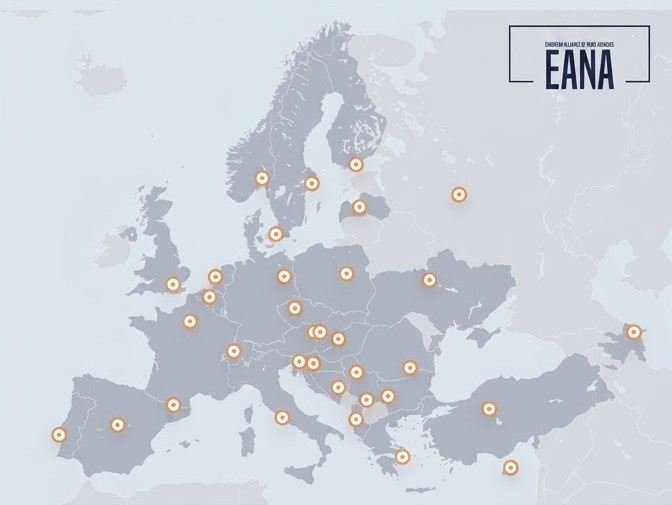
The statement rests the case on value creation. Verified, independent, high-quality news requires significant and continuing investment, and generative AI models rely on that premium content to train their systems and to keep their outputs factually accurate; a durable settlement therefore pays for the content it consumes rather than treating it as a free input. The map of EANA’s member agencies across Europe illustrates the scope of the ecosystem that the statement seeks to sustain.
Reflections
• How does the principle of no content without consent hase to be translated into enforceable obligations within a revised DSM Directive?
• When AI outputs depend on premium journalistic content for their factual accuracy, what remuneration model reflects the real value that content provides?
Conclusion
This week’s material describes some important insight: verified journalism is scarce and costly to produce, and its continued supply depends on being properly paid for. Adversaries work to corrupt the sources that people and machines consult, newsrooms adopt AI to raise the productivity of verified work, search summaries retain the attention that once funded reporting, and courts and regulators test how existing rights apply to a technology that consumes content at industrial scale.
Across these chapters the same three forces recur. Value is created by the human effort of verification and editing. Platforms remain the largest gateways to audiences and carry a corresponding responsibility to set a constructive example. Law provides the framework within which claims establish boundaries, licences establish workable prices, and a sustainable business model can emerge from the combination.
The European agencies, speaking through EANA, place that combination at the centre of their response to the Commission. Their principle of no content without consent expresses in policy terms what the economics already imply, that content used by AI systems should be licensed and remunerated rather than taken as a free good.
For news organisations, regulators, democratic institutions and the readers who care about the information they rely on, the practical task is to move litigation, licensing and innovation towards a shared equilibrium. That equilibrium recognises the value that verified journalism creates, pays for it accordingly, and thereby keeps the ecosystem that the EANA map depicts both independent and financially sound.